
Facilities
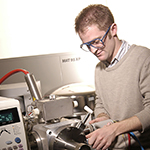
The Department of Chemistry houses a range of outstanding facilities, benefiting both our students and research activities across the Department.
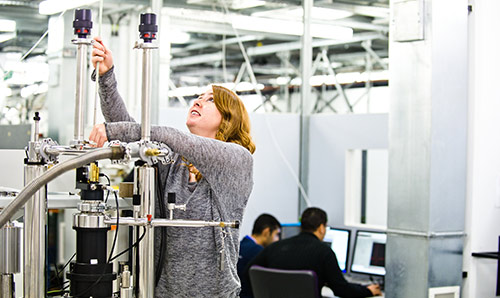
Our excellent facilities, including high-resolution nuclear magnetic resonance spectrometers and several powder systems for X-ray crystallography, are pivotal in enabling all aspects of research across the Department.
We have a vibrant research community that includes more than 70 postdoctoral researchers and over 220 postgraduate students, and we have research links with over 80 companies and 150 overseas universities and research institutes.
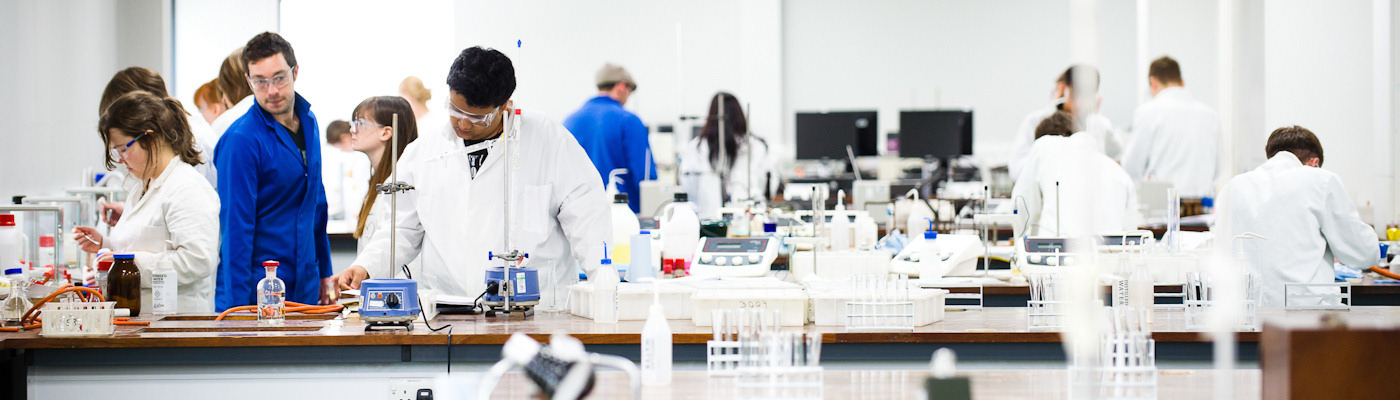
Our students gain practical experience using our £14.1 million teaching labs, and certain facilities are available for use by researchers and external businesses.
Facilities used by the Department of Chemistry include:
-

EPSRC National Facility and Service for Electron Paramagnetic Resonance (EPR) Spectroscopy
The EPR facility and service is located in the Photon Science Institute.
The service provides EPR measurement and analysis services to colleges and universities throughout the UK, as well as for industrial use.
Read more
-
X-ray crystallography
The X-ray crystallography suite provides both single crystal and powder diffraction facilities for staff, students and commercial customers.
The suite houses six X-ray diffractometers that are able to collect data for single crystal collections, powder X-ray diffraction and small angle X-ray scattering measurements.
Read more
-
Digital fabrication
Our digital fabrication team is involved in the inkjet printing field, with projects ranging from conductive tasks to tissue engineering.
Inkjet printing spans a diverse range of knowledge bases leading to many collaborative projects both within and outside The University of Manchester. Facilities include materials printers, a three-dimensional suite and analytical equipment.
-
Centre for Radiochemistry Research (CRR)
A UK centre of excellence providing a national focus for innovative, high-impact radiochemistry research.
The CRR houses equipment for PhD and postdoctoral researchers to conduct radiochemistry research, from environmental speciation to nuclear forensics.
Read more
-
Mass spectrometry laboratory
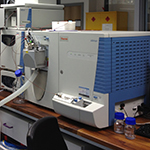
The mass spectrometry laboratory is located in the University's Chemistry Building and provides a range of specialist instrumentations for both staff and students to use.
It deals with well over 15,000 different types of samples a year and different techniques used include electrospray and matrix assisted laser desorption ionisation.
Read more
-
Microanalysis laboratory
Microanalysis is used to help determine the composition and purity of compounds and is generally available for analysis of pure solid chemical samples.
The microanalysis laboratory provides an elemental and thermal microanalysis service to support research and teaching in the Department of Chemistry.
Read more
-
Near-ambient pressure X-ray photoelectron spectroscopy (NAP-XPS)
X-ray photoelectron spectroscopy is a technique that allows for the chemical composition of the surface of a sample to be determined.
The Department of Chemistry's SPECS NAP-XPS system allows for XPS characterisation under realistic conditions and is one of only three in the UK.
Read more
-
Nuclear magnetic resonance (NMR) spectroscopy
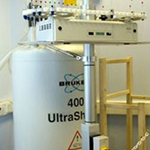
NMR spectroscopy is a powerful, continually evolving analytical technique with wide applications in chemical, biological, pharmaceutical and medical sciences.
Our NMR service offers specialist support and advice in NMR spectroscopy, including help in setting up new experiments and training for researchers and staff.
Read more
-
Chromatography
Our gas chromatography (GC) facilities include three autosampler-based GC instruments with flame ionisation detection, online data acquisition and processing, allied to a GC-mass spectrometry facility.
Our high-performance liquid chromatography (HPLC) facilities include new autosampler-based instrumentation with UV/3D spectral detection, as well as refractive index detection. This includes forward and reverse phase and preparative scale HPLC with variable wavelength detection.
-
Optical spectroscopy
Our optical spectroscopy facilities include UV-visible spectroscopy with diode array detection, range 190nm - 900nm, with a Peltier-controlled cell compartment for temperature studies.
We also have infrared spectroscopy with near, mid and far infrared transmission studies, film, liquid or reflection accessories, and a dedicated diamond crystal attenuated total reflectance instrument for solid and liquid samples in mid infrared radiation.